Otterswick wood (re-wildling a Shetland croft).


Five years ago, when I moved to Otterswick in Yell, I envisioned creating a distinctive, biodiverse area with a focus on nature. The potential was evident, with honeysuckle, greater woodrush, and rare hawkweed growing on nearby sheltered slopes, inaccessible to sheep. The croft was also one of only two locations in Shetland where the dwarf cornel could be found. This beautiful, little known flower, associated with Scandinavian woodlands, hadn't flowered for decades and has its own story worth sharing, which I will cover in a future blog post.

The initial step in re-wilding the croft was straightforward: removing the sheep. Excluding livestock from the land was a daring and debated decision, as it's commonly believed that grazing is essential to control grass growth and allow wildflowers to thrive. While this is true in areas dominated by non-native rye grass, much of my croft consists of wet heathland where sheep would actually harm the native plant life.

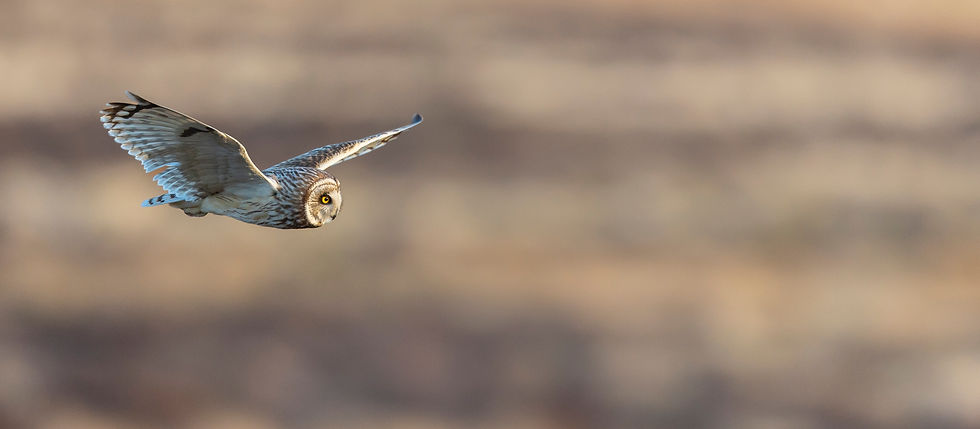
Even after just one season of grazing exclusion the number of wildflowers had increased significantly. After four years, the land has begun to look very different. The once closely cropped common heather (Calluna vulgaris) and cross-leaved heath (Erica tetralix) now stand tall, their flowers providing food for bees and nesting sites for pipits and skylarks. With more nesting passerines, visits from merlins and short-eared owls have also become more frequent. On long summer evenings, I often watch short-eared owls quarter the fields below the house. When they reach the land boundary, they whirl back, drawn to the long grass tipped with seeds, a staple for the thriving population of hill mice (Shetland's only historic, native land mammal). Walking the land, you can easily find their burrow entrances by looking for the tiny doormat of late summer scabious petals and white cotton grass down.
Aside from the grazing exclusion, I also wanted to include some tree cover. There was one area of the croft that stood out as an obvious candidate, a hectare of land that had previously been a hay meadow. Grass was dominant here, and soil samples showed little peat coverage, no doubt as a result of generations of cultivation, which laid the perfect foundation for tree growth. Another key consideration was to ensure the existing breeding birds were not impacted by planting trees. The croft in its entirety consists of 6.5 hectares, only 2.5 of which have been planted with native trees and shrubs, strategically placed in the lower slopes that had either already been previously cultivated or where the peat depth was shallow and plant diversity low.
Curlews nest on the croft annually, and the areas they utilise have been kept open to support this. Curlews need a clear line of sight for nesting, so planting in this area would be harmful. I recognize that, over time, predators might be drawn to nest in the mature woods; however, I firmly believe that the site's increased biodiversity, particularly the rise in invertebrate numbers, outweighs this risk. A notable example is the effect of willow catkins on the population of flying invertebrates, especially bees and hoverflies; these trees are bustling with them in early spring before most wildflowers have started to bloom.

Another strong indicator that planting trees on the land was the right thing to do was the presence of ancient birch bark. In one area of the croft, there had been a landslip. Peppering the exposed peat on either side of what has now become a freely trickling burn are the glistening fragments of birch bark.

This was the start of the first major plantation with just over 3,000 trees consisting of common alder, downy birch, grey and eared willow, rowan, and a small (still a few hundred) number of Scots pine. All of which are species that have evidence of a historic presence in Shetland.

The trees arrived from mainland Scotland, specially selected from seed zones appropriate to the Shetland climate. Three thousand trees looked quite intimidating when they arrived, two pallets brimming with budding saplings. But at a planting rate of around 100 a day and with the help of my family, especially my dad, who despite recovering from a stroke worked extremely hard to get them into the ground before the growing season took hold.

Planting started in early March ahead of the growing season. All the trees arrived at once, of course. While this felt overwhelming initially, it was also a real motivator, knowing they needed to be in the ground quickly to make the most of the increasing daylight length.
The planting method we used for most of the trees was to cut a square of turf, turn it over so the grass is facing down, then split that square in two with the spade. Into that split, we placed each tree. That is three thousand squares of turf cut and turned in just one plantation!

It was so exciting to see the first of the common alder leaves breaking through. These were the smallest of the saplings when they arrived, and they also made up the majority of the trees I ordered. As you can imagine, a few thousand little sticks felt a little underwhelming initially.

Within just one growing season, the common alder in particular absolutely rocketed! My fears of failure were set aside, the negative comments I had heard early on forgotten. Trees can do well in Shetland; you just need the right trees in the right place and the will to get them in the ground. The success of the first plantation led me to plant a second the following year using the same principles as the first. It is already very exciting to see the trees grow and how the wildlife has begun to use them. They aren't quite the size to be encouraging nesting birds, but I have no doubt they will be within the next few years. Before that, and perhaps more importantly, is the food they will provide for those passing through on migration. The berries from the rowan, alder catkins, and increased invertebrate numbers will prove an invaluable respite for species blown in from the east, and who knows what may be encouraged to hang around a little longer.
In addition to the two major plantations funded with the aid of Scottish forestry grants and local donors like Shetland Nature, I planted several hundred trees via a local Woodland Trust scheme. I have also added to this over the last few years with a dozen or so trailer loads of locally harvested willow cuttings. I have completely lost count of how many of these I pushed into the ground, but it has to be in the region of a thousand at a conservative estimate. For the time being, at least, I will watch the existing trees grow with a balance of approximately 60% of the land left as open moorland, feeling right from a biodiversity perspective.

So, what next? I would like to include a large pool and associated wetland area. The primary driver behind this will be to plant it out with native wetland plants such as horsetail (Equisetum), further increase the invertebrate density, and provide good functional habitat for waders. This time, however, I will need something significantly bigger than a spade to get the job done!


Comments